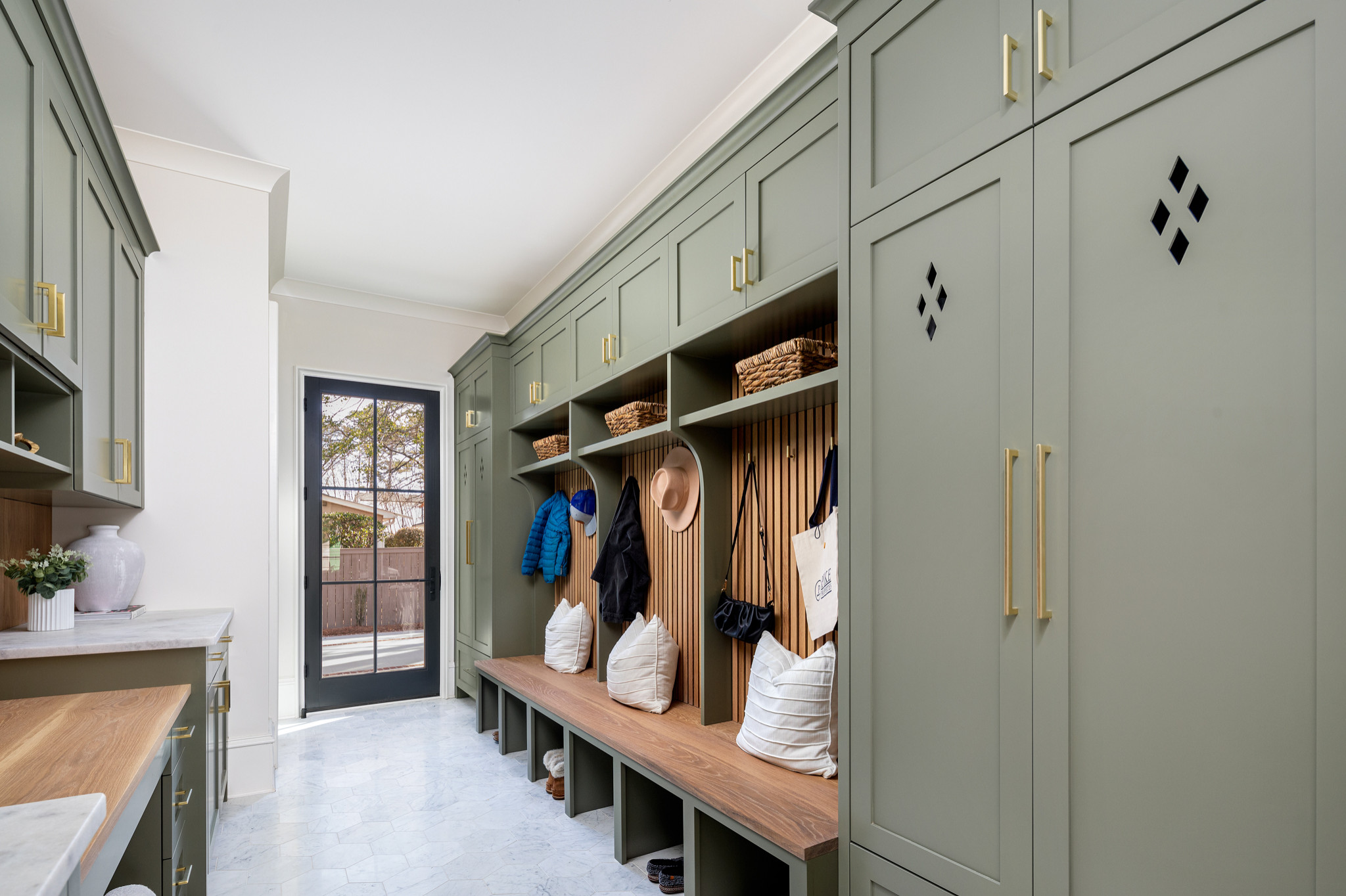
The entryway carries more responsibility than its size suggests. Shoes, coats, school bags, mail, keys, sports equipment, pet supplies, and deliveries all pass through the same area. Effective entryway storage ideas keep those items close to where they enter without blocking movement.
A busy home needs a system that works during rushed mornings and tired evenings. Hooks should sit where people naturally remove coats. Shoes need a place close to the door. Papers and keys should have one clear destination.
Begin by emptying the entry and watching how the household uses it for several days. Notice which objects appear first and where clutter spreads when storage is full.
Families exploring carpentry, furniture, organization, or household support may find planning ideas through regional home service listings. Any installed system should fit the available structure and household needs.
The goal is not to display every item. It is to make leaving and returning home easier.
Entryway Storage Ideas Based On Household Traffic
Storage should protect the main walking path and support the order in which people enter and leave.
Keep The Floor Clear
Shoes often create the first obstacle.
Use low shelves, drawers, trays, or a bench with storage according to available space.
Limit the number of daily pairs kept near the door. Move seasonal or occasional footwear elsewhere.
A family of five may assign one small shoe section to each person. This keeps choices manageable and prevents the entry from becoming long-term storage.
Leave enough floor space for bags, groceries, children, and guests to move safely.
The counterintuitive lesson is that open floor area may be more valuable than maximum storage capacity.
Place Hooks At Useful Heights
Adults and children need storage they can reach.
Use lower hooks for school bags and children’s coats.
Higher hooks may hold adult outerwear or less frequently used items.
Avoid placing too many hooks in one narrow area. Overloaded walls become difficult to use.
Families comparing carpentry, furniture, or household installation categories may browse local property and home listings while checking nearby options.
Hooks work because they require little effort. The easier an item is to return, the more likely the system will survive busy days.
Control Mail, Keys, And Small Daily Items
Small objects create visual clutter because they spread across tables and counters.
Build One Landing Point
Choose one tray, drawer, shelf, or wall organizer for keys, wallets, sunglasses, and small daily items.
Place it close to the natural entry route.
Avoid creating several landing points across the house.
A shallow drawer can keep items hidden while remaining easy to reach.
Use one container for outgoing items such as returns, forms, or packages.
The less obvious benefit is reducing search time. A consistent location can remove several small delays each week.
Create A Paper System That Requires Few Decisions
Sort papers into Broad categories such as action, school, and filing.
Discard unwanted mail before it reaches other rooms.
Keep the action section limited so it remains visible.
A regional organization and household service directory may help families identify local categories connected with storage, furniture, cleaning, or home support.
Do not store long-term records in the entry. Move completed papers to a more suitable household location.
Add Storage Without Making The Entry Feel Smaller
Small spaces need careful depth and proportion.
Choose Shallow Furniture
A narrow console, wall cabinet, or slim bench may provide storage without reducing movement.
Measure door swing, baseboards, outlets, and walkway width.
Drawers support small objects, while open lower shelves may hold shoes or baskets.
Furniture with visible floor beneath it can make the area feel lighter.
A large cabinet may hold more but create daily frustration if people must turn sideways to pass.
The surprising choice may be a smaller piece with better internal divisions.
Use Vertical Space Carefully
Upper cabinets can hold seasonal items.
Shelves may display selected objects while keeping daily supplies below.
Tall storage should remain stable and suited to the wall and floor conditions.
Keep heavy items low.
Families exploring local storage installation, furniture, or household support may review regional property service listings while comparing qualified providers.
Do not fill the wall from floor to ceiling unless the entry has enough visual and physical space.
Build A System The Family Can Maintain
Organization succeeds when every household member understands where common items belong.
Assign Broad Personal Zones
Give each person a hook, basket, drawer, or shelf.
Use simple labels when they help children or guests.
Avoid creating too many categories inside each section.
One basket may hold hats and gloves. Another may hold sports accessories.
Review zones as seasons and schedules change.
The system should remain easy enough for children to use without help.
Reset The Entry On A Regular Schedule
Return shoes, remove old papers, clear packages, and move items belonging elsewhere.
Check seasonal supplies before they become outdated.
Clean mats and floors according to household traffic.
Empty the outgoing basket when errands are planned.
A short reset prevents the entry from becoming storage for unfinished tasks.
The strongest routine may take only a few minutes.
Conclusion
A useful entryway should reduce stress at the beginning and end of the day. Clear floors, reachable hooks, controlled paper storage, shallow furniture, and simple personal zones can turn a crowded entrance into a working household system.
Practical entryway storage ideas begin with the path people already follow. Place each feature where belongings naturally enter, and avoid adding furniture that blocks movement.
Keep daily items close and move seasonal or occasional belongings away from prime space. Use broad categories that every family member can understand.
When the entry resets quickly and common objects have obvious homes, leaving becomes faster and returning feels calmer.
Frequently Asked Questions
What should be stored closest to the front door?
Keep daily shoes, coats, bags, keys, and outgoing items near the entry. Move occasional belongings elsewhere.
How can a narrow entryway gain storage?
Use shallow furniture, wall hooks, slim shelves, narrow cabinets, and carefully planned vertical storage.
Are open hooks better than closed cabinets?
Hooks support quick return, while cabinets reduce visual clutter. A combination often works well.
How many shoes should remain in the entryway?
Keep only frequently worn pairs. Move seasonal, formal, or occasional shoes to another storage area.
How can children keep an entryway organized?
Provide low hooks, reachable baskets, simple labels, and broad personal zones that require little effort.
Where should mail be sorted?
Create one landing point near the entry, remove unwanted paper quickly, and move long-term records elsewhere.
Is a bench useful in a small entry?
It can support shoe changes and storage when depth and walkway space remain comfortable.
How often should an entryway be reset?
A brief weekly reset works for many homes. Busy households may need smaller corrections during the week.