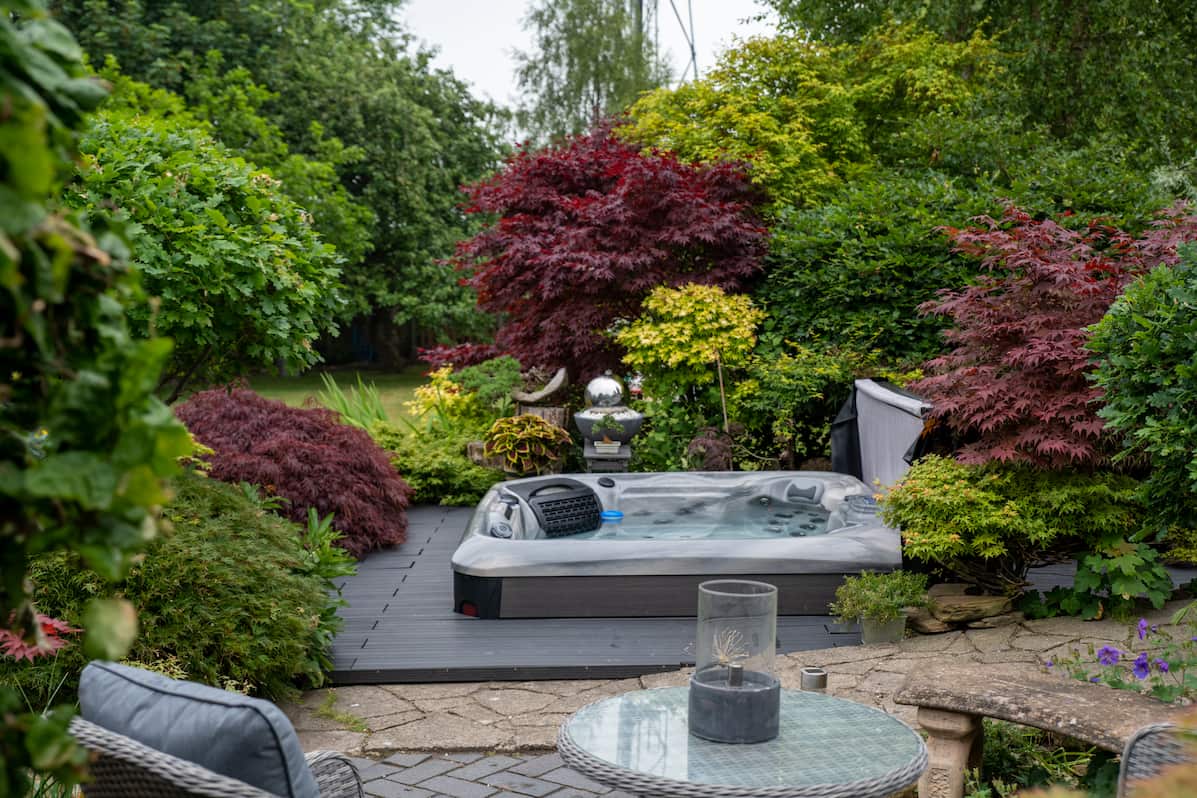
Many gardens have an awkward corner that rarely serves a meaningful purpose. It might be an area behind a shed, a shaded section near a fence, or simply a patch of paving that has never quite fitted into the overall garden design. Instead of leaving this space empty, homeowners can turn it into a comfortable retreat for relaxation and socialising. A thoughtfully positioned hot tub can give an overlooked part of the garden a clear purpose while creating an outdoor area that can be enjoyed throughout much of the year.
Give A Forgotten Space A Clear Purpose
Unused garden corners often exist because they are difficult to incorporate into conventional landscaping. They may be too small for a large dining area or positioned away from the main lawn. A hot tub does not necessarily require a huge amount of surrounding space, making it suitable for areas that might otherwise remain neglected.
The key is to consider how people will move between the house and the new relaxation area. A simple paved path, stepping stones, or decking can connect the space to the rest of the garden. This makes the corner feel intentional rather than like an isolated addition.
Create A Destination Within The Garden
A well-designed garden benefits from having different areas with distinct purposes. There may be a lawn for children, a patio for meals, flower beds for visual interest, and a quieter corner dedicated to relaxation.
Homeowners exploring options from Luso Spas can think beyond the hot tub itself and consider how the surrounding space will function. Adding comfortable access, subtle lighting, nearby storage for towels, and a place for drinks can turn a previously forgotten corner into a destination people actively want to use.
Introduce Interest At Different Heights
One reason unused corners can look unappealing is that they often lack visual structure. Everything may sit at ground level, leaving the area feeling flat. Installing a hot tub introduces another dimension to the landscape and provides an opportunity to build visual layers around it.
Raised planters, tall ornamental grasses, climbing plants, and strategically positioned shrubs can frame the space without completely enclosing it. These elements can soften the appearance of the tub while helping it blend naturally into the garden.
Make Privacy Part Of The Design
Privacy becomes particularly important when creating a relaxation area. Rather than relying on a completely enclosed structure, homeowners can use landscaping to provide screening while maintaining an open atmosphere.
Bamboo style screening, trellises, pergolas, evergreen planting, or decorative garden panels can reduce overlooking from neighbouring properties. When comparing different hot tubs, it is therefore useful to consider not only where the tub will physically fit but also where users will feel comfortable spending time.
Turn An Awkward View Into A Feature
Some neglected garden corners are ignored because they face a plain fence, brick wall, or unattractive boundary. Installing a relaxation area provides an opportunity to redesign that view.
A bare wall could become a backdrop featuring climbing plants or outdoor artwork. A simple fence could be improved with timber battens, greenery, or subtle lighting. Instead of trying to hide the corner, the design can deliberately draw attention toward it.
Think About Comfort Beyond The Water
The experience of using a hot tub begins before anyone enters the water. Walking across muddy grass or slippery surfaces can quickly make an otherwise attractive setup less practical.
Consider installing textured paving, decking, or another suitable outdoor surface around the tub. Space for hooks, robes, towels, and footwear can also make regular use more convenient. A small bench can provide somewhere to sit before entering or after leaving the water.
Consider Energy Use During The Planning Stage
Transforming an unused corner should involve practical planning as well as aesthetics. Access to electricity, drainage, maintenance space, and heating requirements should all be considered before installation.
For homeowners thinking about long-term running efficiency, an air source heat pump hot tub setup may be worth exploring. The heat is transferred from the ambient air by heat pump systems, which do not rely on conventional electric heating. Suitability will depend on the equipment, installation arrangement, climate, and intended usage, so these considerations are best addressed during the initial planning process.
Extend The Garden Into The Evening
An underused corner can become particularly inviting after sunset with carefully planned lighting. Rather than installing one powerful outdoor light, several softer light sources can create a calmer atmosphere.
Low-level path lights can improve visibility, while wall lights, pergola lighting, or discreet fixtures around planting can provide visual warmth. Lighting should be positioned carefully so that it improves safety without shining directly into the eyes of people using the tub.
Create A Space That Works Throughout The Seasons
Gardens are often designed primarily around summer activities, leaving some areas unused for much of the year. A hot tub can encourage homeowners to spend more time outdoors during cooler periods as well.
Shelter from wind, good drainage, suitable pathways, and nearby towel storage can make the area more comfortable when conditions change. Evergreen planting can also help the corner remain visually appealing during winter when many other plants lose their foliage.
Make The Corner Feel Connected
A successful hot tub area should not feel like equipment has simply been placed in an empty space. Materials and design details can help connect it with the rest of the property. Matching existing paving, repeating planting styles, or using timber that complements nearby garden structures can create continuity.
An overlooked garden corner has the potential to become one of the most frequently used areas of the home. With thoughtful placement, privacy, landscaping, lighting, practical access, and attention to year-round usability, a previously forgotten space can become a comfortable outdoor retreat that adds an entirely new dimension to everyday garden living.